The Highlander Folk School: a photographic history
A collection of photographs records workshops, music and the legal fight that surrounded the Highlander Folk School, one of the most important training grounds of the civil rights movement.
A school for organisers
The Highlander Folk School was founded in 1932 by Myles Horton and Don West near Monteagle, in the Cumberland Plateau of Tennessee. It began as a school for labour organisers and rural workers in Appalachia. By the 1950s its work had turned to civil rights.
Its method was simple and unusual. People came to Highlander for residential workshops, lived together across racial lines at a time when that was illegal in much of the South, and worked out solutions to problems from their own communities. The staff did not lecture so much as help participants learn from one another.
Septima Clark directed many of these workshops. With Bernice Robinson and Esau Jenkins, she developed the Citizenship Schools, which taught Black adults to read and write so they could register to vote. Rosa Parks attended a Highlander workshop in 1955, months before her arrest in Montgomery.
Music was part of daily life at the school. Songs were taught, adapted and passed on there, and many later became anthems of the movement.
What the collection holds
The photographic history was assembled as an online collection with keyword search, browsing and full catalogue records for each image. Its photographs range across decades of the school's life and its successor organisation.
The collection's own highlights give a sense of its range:
- an informal portrait of Lewis Sinclair as a small child;
- Bernice Robinson, Joe Brown, Rosa Parks, Anne Bordon and others together at Highlander's 25th anniversary in 1957;
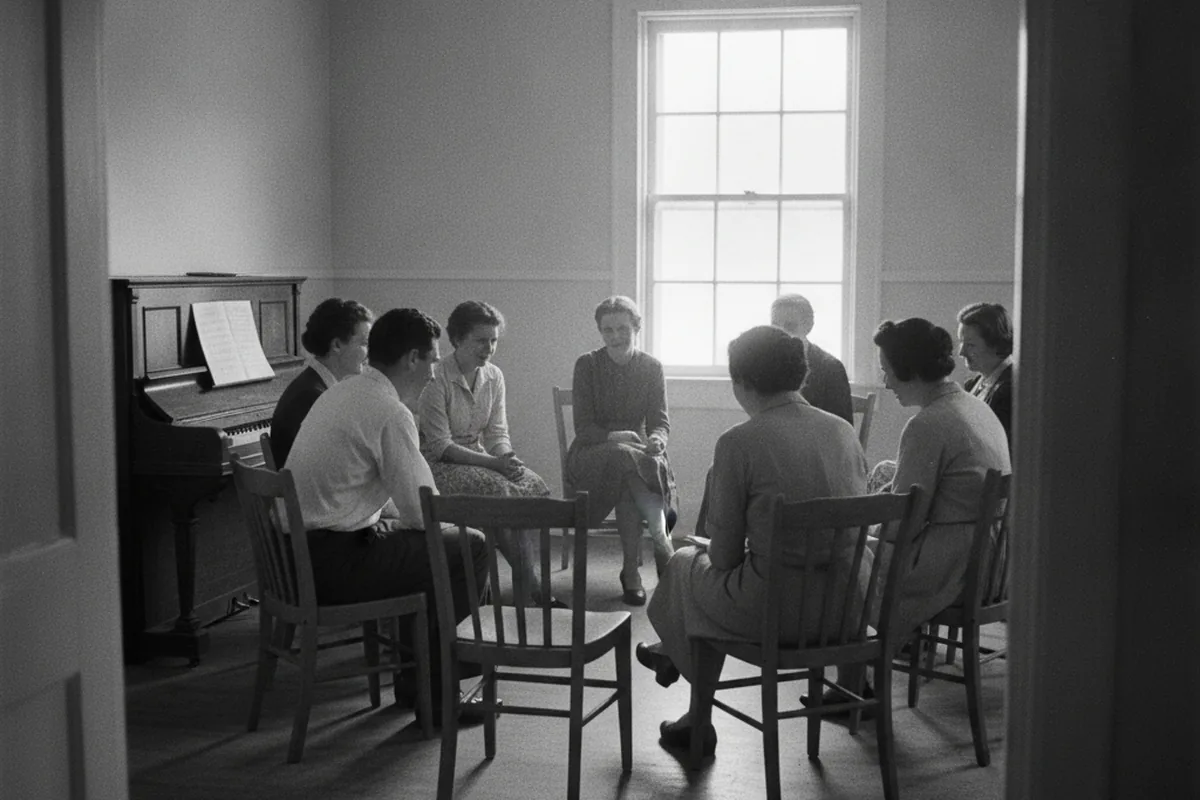
- Earl Gilmore at the piano and Guy Carawan with a guitar, each with another musician, during a multi-racial workshop in 1970;
- Myles Horton with a SNCC workshop group in Knoxville, including Reggie Robinson, Bill Hanson, Rutha Harris, Charles Jones and Cordell Reagon.
The pictures are informal. They show people talking, singing, eating and planning, which is exactly what Highlander was for. Two record pages in this archive describe individual photographs in more detail: a meeting after the 1959 raid and a workshop session.
The 1959 raid and the court fight
Highlander's work made it a target. Segregationist officials in Tennessee wanted the school closed, and they went looking for grounds.
On the night of July 31, 1959, at about nine o'clock, local officers led by District Attorney Albert F. Sloan raided the school. They said they had a warrant to search for alcohol. Septima Clark was arrested on a charge of possessing whiskey. When Perry MacKay Sturges and Guy Carawan followed the officers to ask whether she could call a lawyer, they were arrested too, on charges of public drunkenness, interfering with officers and resisting arrest.
The raid was the opening move in a legal campaign. A petition was filed to padlock the school, and a hearing was set for September 14, 1959. Nashville lawyers Cecil Branstetter and George Barrett took on the defence.
The state ultimately revoked Highlander's charter and seized its property. The work did not stop. Its staff reorganised as the Highlander Research and Education Center, which moved to Knoxville and later to New Market, Tennessee.
Highlander today
The Highlander Research and Education Center continues the school's work. Its website is the place to learn about its history in its own words and about current workshops and programmes. We are not connected to the Center and do not speak for it, and we encourage readers to start there.
The photograph collection belongs to the MetaScholar story because Highlander was a partner in Music of Social Change. That project gathered descriptions of music-related materials from libraries, museums and archives, and Highlander's role in teaching and spreading freedom songs made its records essential.
A note on images: where this archive shows a picture alongside a photograph record, it is an illustrative reconstruction, clearly labelled, not the archival photograph. We describe originals in words and point to their holders.
For more on the music, see our essays on Broadside magazine and the Albany Movement.
Index
Informal portrait of Lewis Sinclair as a young child.
Seated together with others at Highlander's 25th anniversary.
At the piano with a guitarist during a multi-racial workshop.
Playing guitar for a small audience during a multi-racial workshop.
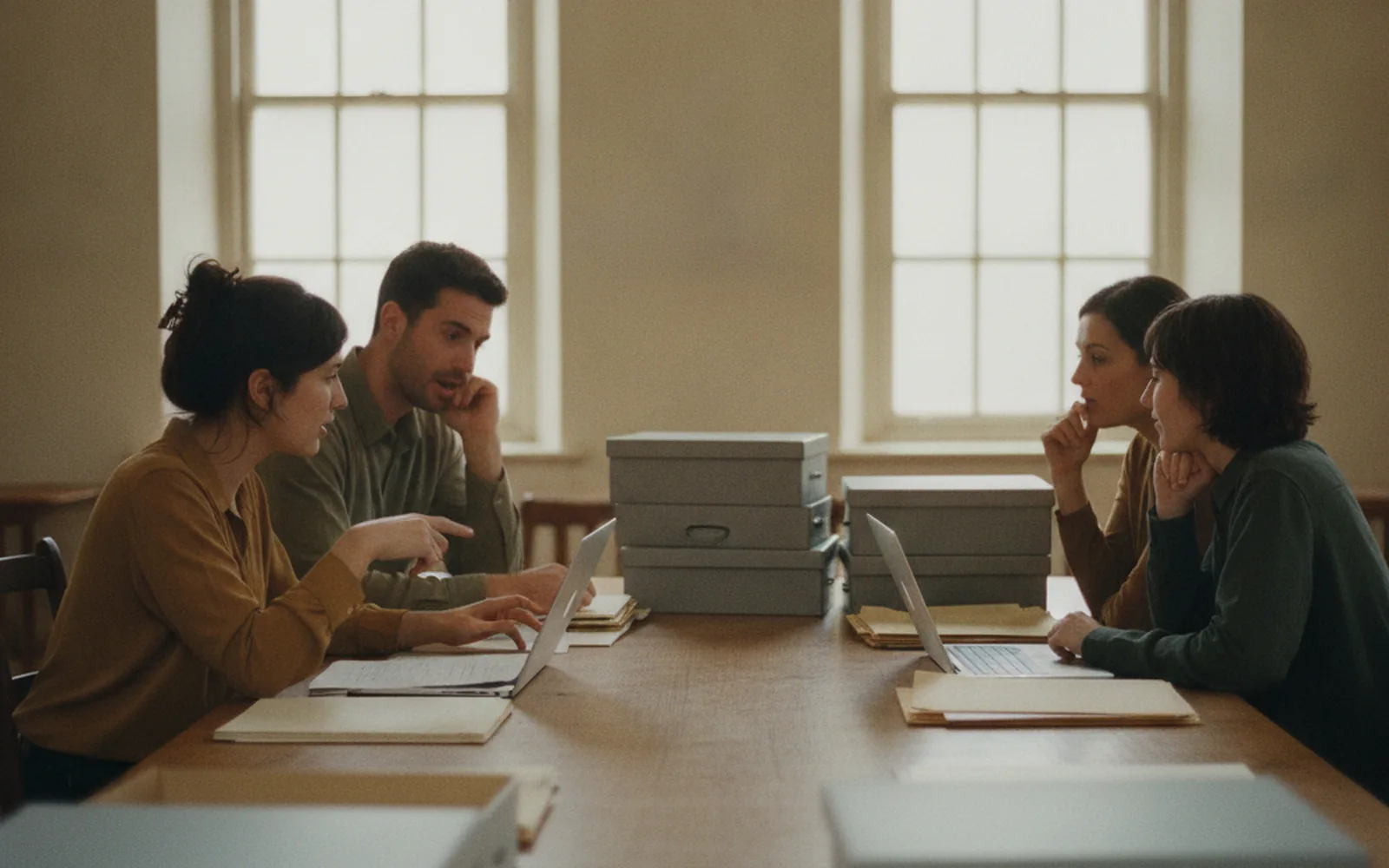
Workshop group in conversation around a table in Knoxville.