Open access and preservation, one room
In October 2004 the MetaScholar Initiative put open access advocates and preservation engineers on the same program. The editors revisit what that day argued and what held up.
Two problems, one agenda
The MetaScholar Initiative was a digital library research programme run from Emory University's Woodruff Library in the 2000s. Its first public symposium, held on Saturday, October 2, 2004, started from a blunt premise. A large share of new scholarship was exposed on two fronts at once.
The first was legal and commercial. Publishing contracts and subscription pricing could put recent research out of reach of the people who produced it. The second was technical. Many universities were only beginning to admit that their own systems were not built to keep digital files readable for decades.
The organizers treated these as connected questions. If research is published openly, someone still has to keep it. If an institution builds durable storage, it still needs the right to copy and serve what it stores. Putting both conversations in one amphitheater was the point of the day.
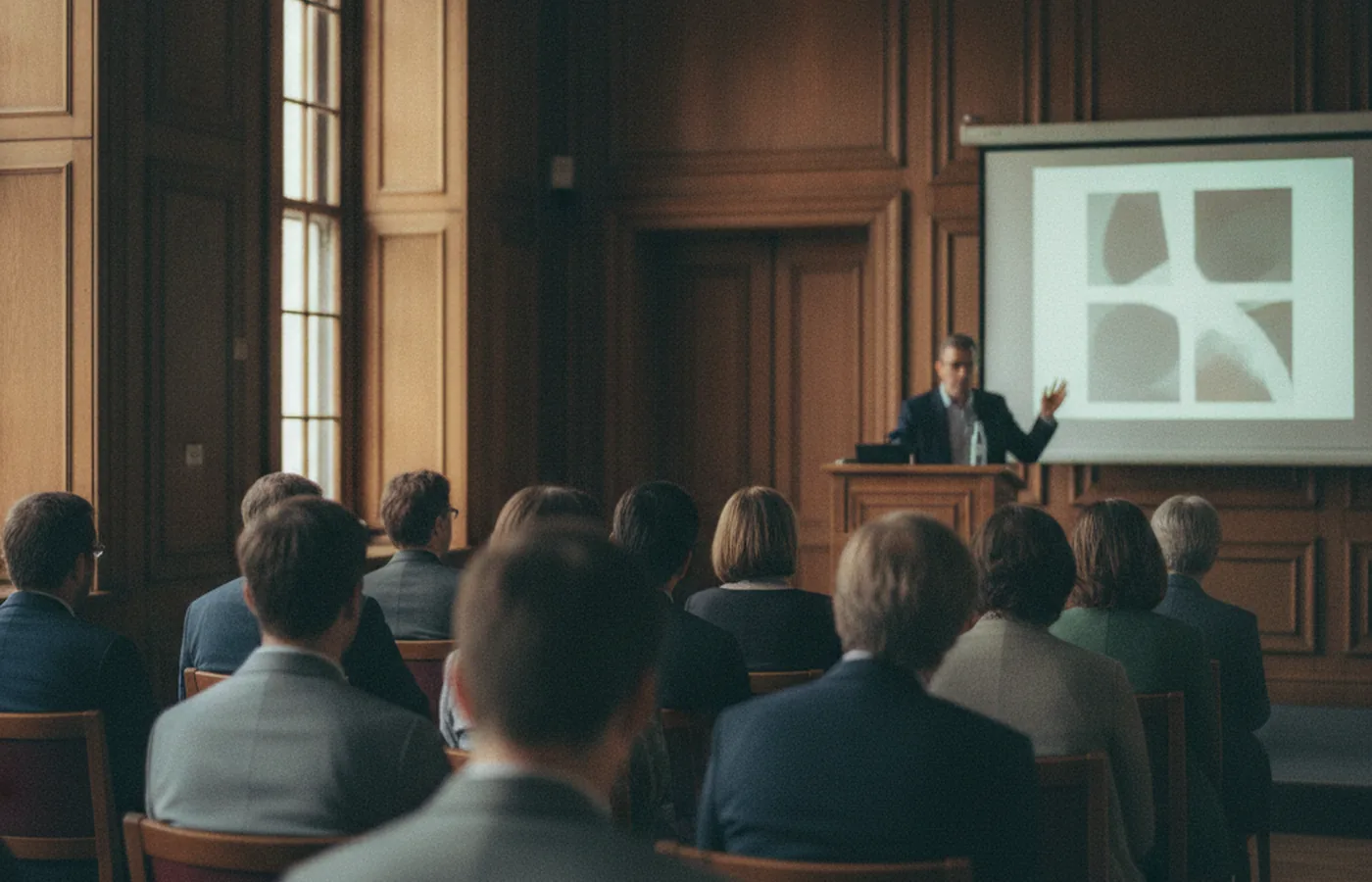
The program ran from morning registration to closing remarks in the late afternoon, with a keynote, a featured speaker over lunch and four panels. Later posts on the original page added links to slides and to short summaries of each talk.
Who was on the program
The keynote went to David Seaman, then executive director of the Digital Library Federation and earlier the founding director of the University of Virginia's Electronic Text Center. He set the tone for a day that moved between policy and engineering.
The first panel covered the legal, economic and social side of open access. It brought together Ray English of Oberlin College, who sat on the SPARC steering committee, the Georgia Tech economist Mark McCabe, and Dwayne Buttler of the University of Louisville.
The second panel looked at partnerships between institutions. Caroline Arms spoke for the Library of Congress digital preservation programme, alongside Martin Halbert of Emory and Tyler Walters of Georgia Tech, both connected to the MetaArchive effort.
David Shulenburger of the University of Kansas gave the featured talk after lunch. The third panel turned to technology, with Thomas Robertson of the LOCKSS Program at Stanford and John Willinsky of the Public Knowledge Project, who demonstrated Open Journal Systems. The last panel handed the floor to editors of working open access journals, including Molecular Vision and Southern Spaces.
Preservation as shared work
The most durable idea from the day was that preservation does not have to be a solo effort. The LOCKSS model, presented by its technical manager, kept several copies of the same content at different libraries and let the copies check each other over time. No single server was the authority.
That idea sat comfortably next to the second panel. Emory and Georgia Tech were already working toward what became the MetaArchive preservation strand, a cooperative network focused on the culture and history of the American South. The Library of Congress, through its national preservation programme, was funding exactly this kind of partnership.
Read today, the panel pairing explains a lot. Distributed preservation needs a social agreement before it needs software. Partners must decide what is worth keeping, who pays, and how a member leaves. Those questions later filled whole reports, and they first surfaced here as panel topics.
The LOCKSS program and the MetaArchive Cooperative both continue in some form. That continuity is unusual for projects of the period.
What held up, twenty years on
Several claims from 2004 aged well. Open access journals run by small editorial teams turned out to be viable, and tools like Open Journal Systems made them cheaper to start. Distributed copies became a standard recommendation for preservation planning.
Other questions stayed open. The economics panel asked who pays when readers do not. That question moved from subscriptions to article fees to institutional subsidies, and it still has no single answer. The partnership panel asked how institutions share responsibility for content they do not own. Many consortia still work that out case by case.
For readers of this archive, the 2004 symposium is a useful starting point. It shows the MetaScholar Initiative treating access and preservation as one problem early on. The same thread runs through the 2006 symposium on sustaining digital libraries and the 2007 distributed preservation workshop.
The editors have not reproduced the original slides. Where a talk is described here, it is described from the published program, not from a recording.
Index
Digital Library Federation
Ray English, Mark McCabe, Dwayne Buttler
Caroline Arms, Martin Halbert, Tyler Walters
University of Kansas
Thomas Robertson (LOCKSS), John Willinsky (PKP)
Molecular Vision, Journal of Cognitive Affective Learning, Southern Spaces