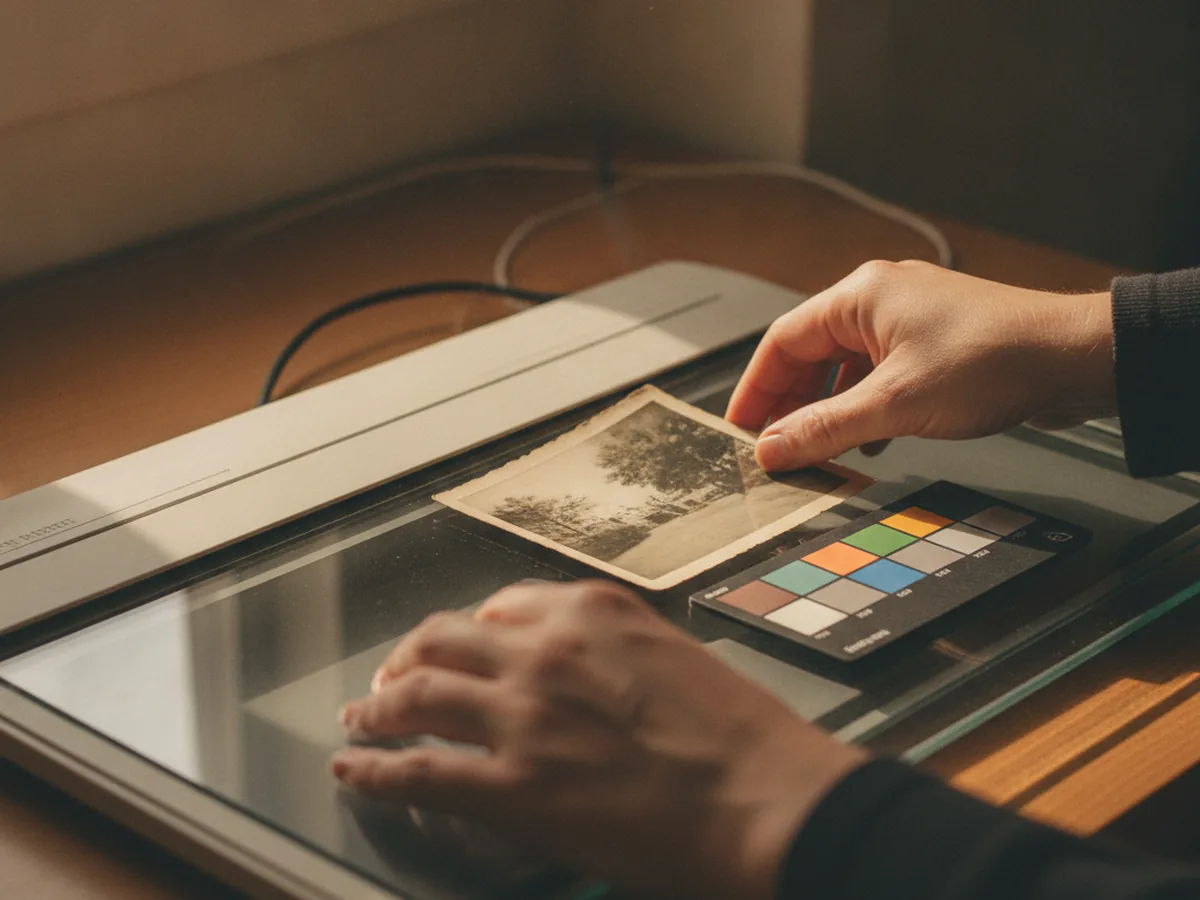
Every digitized item that goes online makes a quiet claim about rights. Sometimes it says "this is in the public domain." Sometimes it says "you may reuse this under these terms." Too often it says nothing, or says something the institution cannot back up. A clear, honest rights label is one of the most useful pieces of metadata a collection can carry.
Two systems now do most of this work: Creative Commons and RightsStatements.org. They look similar on a web page. They do very different jobs.
Two systems, two jobs
Creative Commons licenses are legal tools for rights holders. If you own the copyright in a work, you can apply a CC license to grant the public permission to reuse it on stated conditions. The current suite is version 4.0, released in 2013. It has six licenses built from four conditions: attribution, share-alike, non-commercial and no derivatives.
Creative Commons also offers two public domain tools. CC0 lets a rights holder waive their rights as far as the law allows. The Public Domain Mark labels a work that is already free of known copyright. The mark is not a license, because there is nothing left to license.
RightsStatements.org solves a different problem. Libraries, archives and museums often hold material whose rights they do not own. They cannot license it. What they can do is describe its status. RightsStatements.org, launched in 2016 by Europeana and the Digital Public Library of America, provides a set of standardized statements for exactly that purpose.
| Question | Creative Commons | RightsStatements.org |
|---|---|---|
| Who applies it? | The rights holder | The institution holding the item |
| What does it do? | Grants permission to reuse | Describes the rights status |
| Is it a legal license? | Yes (except CC0 and the Public Domain Mark) | No |
| Typical use | Your own photographs, essays and data | Third-party material in your collections |
The twelve statements
RightsStatements.org offers twelve statements in three groups. Each has a stable URI, which makes it easy to store in metadata and to aggregate across institutions.
- In Copyright. Five statements, including a plain "In Copyright," variants that allow educational or non-commercial use, an EU orphan work statement, and one for cases where the rights holder could not be identified or located.
- No Copyright. Four statements for material that is free of copyright but still carries some restriction, such as contractual terms, a non-commercial requirement, other legal restrictions, or public domain status only in the United States.
- Other. Three statements for situations where status is not clear: Copyright Not Evaluated, Copyright Undetermined and No Known Copyright.
The "Other" group is where honesty pays off. It gives an institution a respectable way to say "we have not checked" or "we checked and could not tell." That is far better than defaulting to "all rights reserved" or, worse, to an unfounded claim of public domain.
Labeling honestly
A rights label should describe what you actually know. A few principles help:
- Do not claim copyright you do not hold. Scanning a public domain photograph does not create a new copyright in most contexts. Labeling the scan "all rights reserved" misleads users and discourages lawful reuse.
- Separate the object from your description. Your catalog records, essays and thumbnails may be yours to license under CC. The digitized item may not be. Label each layer accordingly.
- Use the most specific accurate statement. If you researched a work and found it is public domain in the United States, say so. If you have not researched it, use Copyright Not Evaluated.
- Record the basis. Keep a note of the date of publication, death date or other evidence that supports your choice. It makes review faster later.
Public domain status depends on jurisdiction and date. In the United States, works published in a given year enter the public domain on a rolling basis each January 1. Unpublished material and works from other countries follow different rules. When a decision is borderline, document your reasoning rather than guess.
Finally, make the label readable. Show the statement name and its icon on the item page, link to the official explanation, and add one plain sentence about what the user may do. A visitor should not need a law degree to decide whether they can put an image in a class handout.
Unknown rights and orphan works
Orphan works are copyrighted works whose rights holders cannot be identified or found. Archives are full of them: amateur photographs, small-press pamphlets, letters from people with no known heirs. They are often the most historically interesting material and the hardest to clear.
The problem has a long policy history. In 2005 the U.S. Copyright Office issued a Notice of Inquiry on orphan works. At the MetaScholar Initiative's Symposium on Free Culture and the Digital Library that October, Denise Troll Covey of Carnegie Mellon University Libraries presented an analysis of the responses to that inquiry. The European Union later adopted its Orphan Works Directive in 2012, which created a limited permitted use for certain cultural heritage institutions. In the United States, no dedicated orphan works statute has passed, and institutions generally rely on fair use, risk assessment and takedown policies.
For labeling, the practical answer is RightsStatements.org's In Copyright statement for unidentified or unlocatable rights holders, or the EU orphan work statement where that legal status applies. Pair it with a clear contact route so a rights holder who does appear can reach you. Our article on fair use and mass digitization covers the legal reasoning that often sits behind putting such material online.
Putting it into the record
Rights labels work best as structured data, not just text on a page. Store the statement URI in a dedicated field. In Dublin Core that is usually the rights element, or the license term in DCMI Metadata Terms for CC licenses. Add a free-text note for any local conditions. Expose both through your harvest feeds so aggregators can display and filter them.
Treat rights metadata as living data. Status changes. A work enters the public domain, a rights holder grants permission, an heir writes in. Schedule a yearly review of items labeled Copyright Not Evaluated or Undetermined, and update the ones whose status has changed. A small annual pass keeps the labels accurate and steadily moves material toward open reuse.
Start with an audit. Pull every distinct rights value from your collections and group them. You will likely find dozens of free-text variants that mean the same thing. Map each group to one standardized statement or license, flag the ones that need research, and fix the rest in a batch. That single cleanup makes collections easier to reuse, easier to aggregate and easier to defend. The broader questions behind it are the ones explored in free culture twenty years on, and they have not gone away.