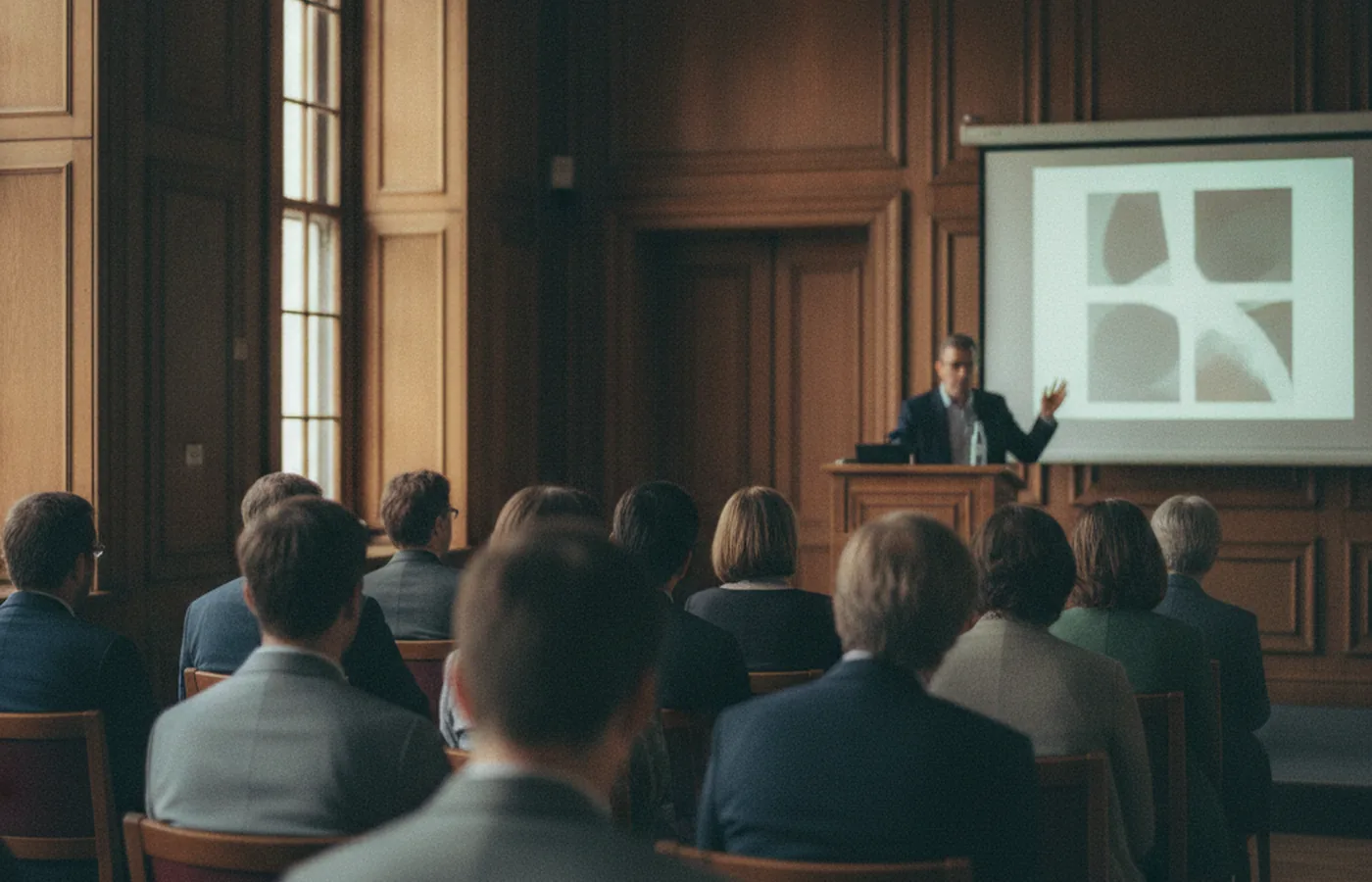
On October 14, 2005, the MetaScholar Initiative hosted the Symposium on Free Culture and the Digital Library at Emory's Gambrell Hall, with Lawrence Lessig and Siva Vaidhyanathan as featured speakers. Its subject was the relationship between digital access to public cultural information and the legal limits placed on that access. Twenty-one years later, the subject has not gone away. Some of the problems discussed that day have eased. Others have moved to new ground.
This post revisits the symposium's main threads and asks what a digital library manager should take from them now. It is editorial commentary, not legal advice. Rights questions about specific collections belong with counsel.
What 2005 was arguing about
The context matters. The Copyright Term Extension Act of 1998 had added twenty years to most copyright terms, and the Supreme Court upheld it in Eldred v. Ashcroft in 2003. Lessig, who argued that case, had published Free Culture in 2004. Creative Commons licenses were only a few years old. Peer-to-peer file sharing was a constant headline, and the symposium's call for papers named both the Library of Congress and Kazaa as examples of open digital infrastructures affected by new legal limits.
The list of presenters and papers shows how wide the conversation was. Marjorie Heins of the Brennan Center asked whether fair use would survive the digital age. William Maher of the University of Illinois Archives and Denise Troll Covey of Carnegie Mellon both addressed orphan works, the latter through the responses to the Copyright Office's notice of inquiry on the topic. Simeon Warner reflected on fourteen years of the arXiv. Edward Fox described how the Networked Digital Library of Theses and Dissertations made open sharing of student research routine. Karrie Peterson and James A. Jacobs examined government information. Others discussed Wikipedia and commons-based peer production.
Read together, those titles describe a field that saw both a threat and an opening. Law was tightening control over cultural material. At the same time, open licenses, open repositories and volunteer communities were showing another way to share knowledge.
What changed in twenty years
Several of the 2005 concerns look different today. The table below is a rough scorecard from the perspective of a library or archive in the United States.
| Issue in 2005 | Situation in 2026 |
|---|---|
| Frozen public domain after term extension | Works began entering the U.S. public domain again in 2019, one year of publications each January |
| Uncertain fair use for mass digitization | Federal appeals rulings in the HathiTrust and Google Books cases supported search and accessibility uses |
| Orphan works with no clear path | The Copyright Office studied the problem again, but the U.S. still has no orphan works statute |
| Open licenses as an experiment | Creative Commons licenses are standard across repositories, journals and educational resources |
| Open access as an advocacy position | Institutional and funder open access policies are common, and repositories are routine infrastructure |
| Lending digital copies | A federal appeals court rejected the Internet Archive's fair use defense for its lending program in 2024 |
The pattern is mixed. Courts have been receptive to transformative uses such as indexing and access for people with print disabilities. They have been less receptive to uses that substitute for buying a copy. Licensing has filled much of the space that law left open. Orphan works remain an unsolved problem, exactly as the 2005 presenters feared.
Backlog1
In progress2
Ready for review1
Preserved1
Practical rights work for digital collections
For a working digital library, the useful question is not who won the argument. It is how to make clear, defensible decisions about each collection. A few habits help.
- Record rights status in metadata. Use a standard vocabulary such as the RightsStatements.org statements, so users and aggregators can read your assessment by machine.
- Separate the object from the description. Metadata can often be released under an open license even when the digitized object cannot.
- Document your reasoning. When you rely on fair use or the library exceptions in Section 108, write down why. A short memo protects the decision when staff change.
- Use the public domain calendar. Each January, check which items in your holdings have just become free to share.
- Offer a takedown and contact path. A clear, responsive process for rights holders lowers the risk of sharing material whose status is uncertain.
- Prefer open licenses for what you create. Finding aids, transcriptions, essays and software produced by your staff can usually carry a Creative Commons or open source license.
Open access grew up
Several 2005 papers treated open access as a cause that needed champions. Meghan Miller Brawley wrote about librarians as catalysts for change. Aaron Krowne of Emory argued that free culture would save digital libraries. Fox urged university leaders to go home and start thesis programs. That advocacy worked better than many expected.
Open access is now ordinary infrastructure. Institutional repositories run at most research universities. Funders in the United States and abroad require public access to the results of research they pay for. Electronic theses and dissertations are the default at many graduate schools. Preprint servers have spread from physics and mathematics into biology, medicine and the social sciences, following the path the arXiv opened.
The new problems are quieter. Repositories need sustained funding and good metadata. Article processing charges have shifted costs rather than removed them in some fields. Library staff spend more time on compliance and less on outreach. None of this undoes the 2005 argument. It shows what happens when an argument wins and becomes routine work that someone has to do every day.
Orphan works, still
Orphan works deserve their own note because they were central in 2005 and remain unresolved. Many archival collections, especially photographs, letters, pamphlets and local publications, include material whose rights holders cannot be identified or found. Without a statute, institutions rely on risk assessment: the age and nature of the material, the likelihood that a rights holder exists and would object, the value of access, and the institution's ability to respond to a claim.
Many institutions now publish their risk assessment approach and accept that reasonable, documented decisions are better than leaving collections dark. The Free Culture presenters who worked on orphan works were arguing for a legal fix. Two decades later, practice has moved further than law. That is not ideal, but it means collections that would have stayed offline in 2005 are often available today.
What to take forward
The symposium's core claim was that law and technology shape each other, and that libraries have a stake in both. That claim has held up. New questions, including how cultural collections may be used to train machine learning systems, are now going through the same cycle of uncertainty, litigation and licensing that mass digitization went through after 2005.
Libraries are better prepared this time. They have rights vocabularies, open licensing norms, documented fair use practice and two decades of case law on access. They also have the example of the 2005 conversation itself: lawyers, librarians, technologists and scholars in one room, comparing notes. Our briefing on the symposium proceedings covers the original papers in more detail.