Civil rights collections are among the most requested materials in American archives. They are also among the most sensitive. The photographs, recordings, letters and organizational records of the freedom struggle document real people, many of whom took serious risks, and many of whose families and communities are still here. Putting that material online is a public good. Doing it carelessly can cause harm.
This post sets out the ethical questions a digitization project should answer before, during and after it publishes a civil rights collection. It draws on the history of two MetaScholar-era projects and on practices that archives have developed since.
Two early projects
The MetaScholar Initiative at Emory worked with civil rights material in the 2000s. The Music of Social Change project, funded by the Institute of Museum and Library Services, built a shared search system for records about music and the African American freedom struggle held by several institutions, including the Highlander Research and Education Center, the Atlanta History Center and the Center for the Study of Southern Culture. Its essays included a history of Broadside, the New York mimeographed magazine that from 1962 circulated topical songs written in response to the movement.
A related site, The Highlander Folk School: A Photographic History, presented photographs of workshops, gatherings and people connected to the school. Its featured story covered the July 31, 1959 raid on Highlander, the arrest of workshop director Septima Clark, and the legal effort that followed to close the school. Its records named well-known figures, such as Rosa Parks at the school's twenty-fifth anniversary in 1957, alongside people listed only as unidentified participants.
Those records show the strengths and the limits of the period's approach. Description was careful and specific where knowledge existed. Where it did not, people remained anonymous, and there was little machinery for communities to add what they knew.
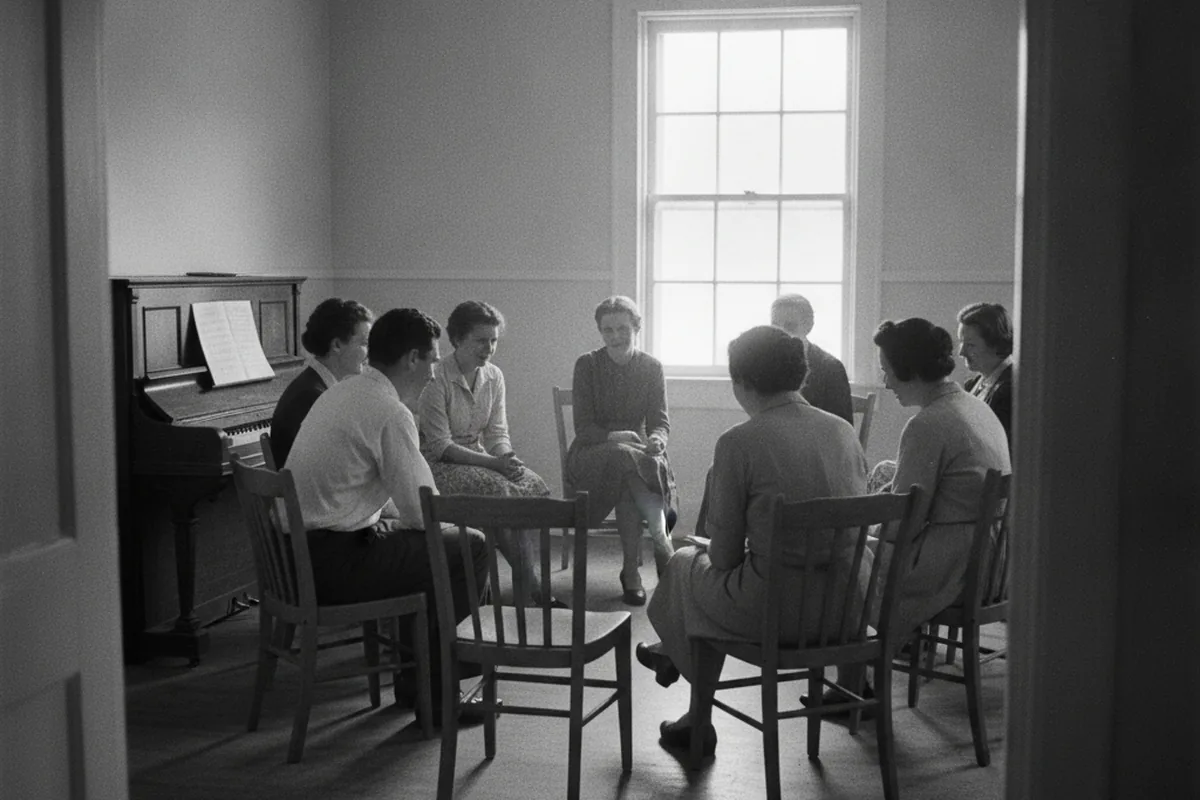
A project starting today with the same photographs would likely do a few things differently. It would treat every unidentified participant as an open question rather than a final answer, and publish a simple way for visitors to suggest names with a source. It would hold identification sessions with alumni of the workshops, their families and the center itself, and record those conversations as part of the collection. It would mark which details came from original captions and which from later research. And it would expect the description to keep changing for years, because the people who can fill the gaps are still living. None of this criticizes the earlier work. It builds on the base that work created.
The core questions
Every civil rights digitization project faces the same small set of ethical questions. Writing down your answers before you scan the first item makes later decisions easier and more consistent.
- Who is depicted, and could exposure harm them? Images of protesters, workshop participants or people under arrest may identify individuals who never expected wide publication.
- Who has a stake beyond the legal owner? Families, movement organizations and communities may hold moral claims even when the archive holds the rights.
- Whose language is in the description? Catalog records written decades ago may repeat the terms of police files, newspapers or hostile officials.
- What context does a viewer need? A single image detached from its story can be misread, mocked or misused.
- How can people respond? Is there a way to identify someone, correct an error or ask for a change?
Description practice
Description is where most ethical choices become visible. Several practices have become common in the last decade, informed by work such as the Archives for Black Lives in Philadelphia anti-racist description guidance and by projects that invite community input.
| Practice | What it means | Why it matters |
|---|---|---|
| Name people where known | Identify individuals, not only famous figures, when sources support it | Avoids reducing participants to background figures |
| Separate source language from catalog voice | Quote original captions in quotation marks, with attribution | Preserves evidence without adopting hostile terms |
| Explain revisions | Note when and why a description changed | Keeps the record honest and auditable |
| Add context notes | Link items to events, organizations and essays | Reduces misreading of isolated images |
| Record community knowledge | Accept identifications and corrections with attribution | Treats communities as sources, not only audiences |
None of these requires new technology. They require time, a written policy and a willingness to revise records that once looked finished.
Access decisions
Not everything that can be published should be published at full resolution, immediately, with open download. Archives have more options than open or closed.
- Tiered access. Publish description and a modest image online, and offer high-resolution files on request.
- Delayed release. Hold material about living private individuals until consultation is complete.
- Community review. Before launch, invite people connected to the collection to look at selections and descriptions.
- Clear rights statements. Separate legal status from the archive's own request about respectful use, and say both plainly.
- Responsive takedown. Publish a contact path and a timeline for reviewing concerns, and follow it.
Records from organizations under surveillance or legal attack need particular care. Membership lists, correspondence and internal minutes may have been seized or copied by hostile authorities in the past. Publishing them widely can reproduce that exposure, even with good intentions.
Relationships over time
The most durable lesson from civil rights archives is that ethics is a relationship, not a checklist. Highlander itself continues as a working education center, and its history is still part of its present. Many organizations whose records sit in university archives are active today. Their members are researchers, users and critics of the collections that describe them.
Projects that treat a digitization grant as a one-time transaction tend to publish and move on. Projects that treat it as the start of a relationship build advisory groups, return copies to communities, invite oral histories alongside documents, and revisit description as new knowledge arrives. The second approach costs more staff time. It also produces better records, because the people who know the most are part of the work.
A short checklist
Before publishing a civil rights collection, a project team should be able to answer yes to each of the following. Is there a written policy covering description, access and takedown? Have people with a stake in the material been consulted? Are source captions clearly distinguished from catalog language? Does each item link to context? Is there a public, staffed way to submit corrections? Is there a plan to revisit descriptions on a schedule?
The archives of the freedom struggle exist because people insisted on being seen and heard on their own terms. Digitization can honor that insistence or flatten it. The difference lies in choices that are small one at a time and large in sum. For more on the earlier projects, see our pages on Broadside and topical songs and the Highlander Research and Education Center.