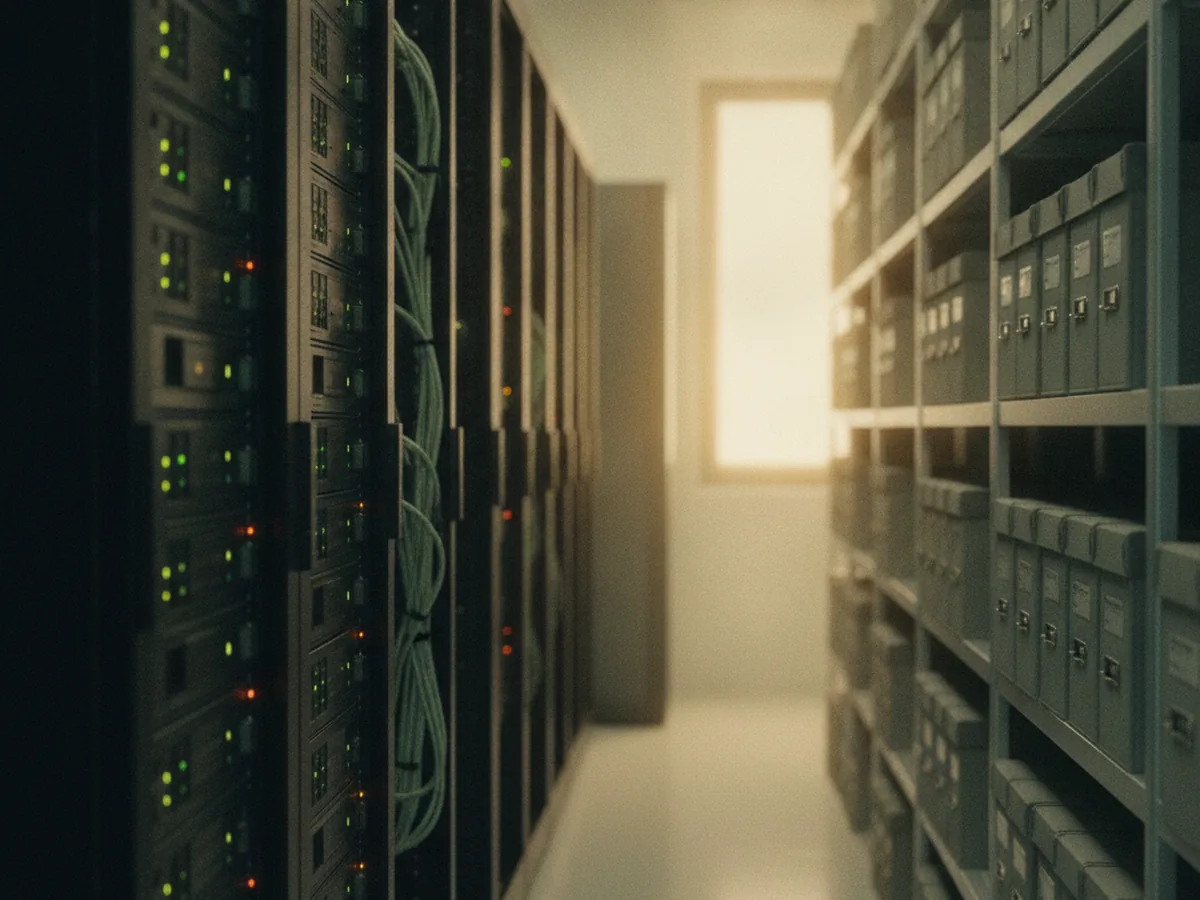
LOCKSS stands for Lots of Copies Keep Stuff Safe. The name is also the design principle. Instead of trusting one well-run server, you keep several independent copies of the same content in different places, and you let those copies check each other. When one copy goes bad, the others notice and repair it.
The idea came out of Stanford University Libraries around the turn of the century, first as a way to preserve subscribed e-journals. It has since become the basis for a family of community-run preservation networks. This post explains how the system works, what a distributed network asks of its members, and what the MetaArchive story shows about running one.
How LOCKSS works
A LOCKSS network is a set of nodes, each run by a participating institution. Every node holds a copy of the content the network has agreed to preserve. The software on each node does three things continuously.
- Collects. Nodes ingest content from a source, typically by crawling it over the web according to a plugin that describes the site's structure.
- Audits. Nodes take part in polls. In a poll, a node asks peers to compute hashes over a piece of content and compares their answers with its own. Agreement is evidence that the copies are intact.
- Repairs. If a node finds that its copy disagrees with the consensus, it fetches a good copy from a peer or from the original source and replaces the damaged one.
The polling protocol is designed to tolerate faults and to resist attackers who might try to corrupt content by controlling some nodes. No single administrator can silently alter the preserved record, because the other copies keep voting.
This is a different model from backup. A backup is a copy you hope to restore from. A LOCKSS copy is checked against its peers on an ongoing basis, so damage is found while it can still be fixed.
Two limits are worth stating early. LOCKSS protects bits and their integrity. It does not by itself migrate file formats or guarantee that a file will still render in twenty years. That work, often called logical preservation, needs format identification, documentation and planning on top of the network. LOCKSS also assumes that content can be collected in a predictable way. Collections that live inside complex web applications or databases usually need to be exported to files first, often packaged with BagIt and checksums, before a network can take them in.
Private LOCKSS networks
Beyond the global network used for published journals, institutions can run a Private LOCKSS Network, often called a PLN. The members decide what to preserve, who joins, and how the network is governed. The technology is the same. The difference is that the content belongs to the members, and the members carry the work.
| Question | Single-site preservation | Private LOCKSS network |
|---|---|---|
| Where copies live | One institution, maybe an offsite backup | Several member institutions in different locations |
| How damage is found | Local fixity checks, if scheduled | Continuous polling among peers |
| Who repairs | Local staff from backups | The software, from agreeing peers |
| Main risk | Shared failure at one site or one budget | Weak governance or members leaving |
| Main cost | Storage and staff at one site | Hardware at each node plus coordination |
The table shows the trade. Distribution removes the single point of failure in technology and in organization. In return, it adds a coordination job that someone must own.
The MetaArchive example
The MetaArchive Project, run by the MetaScholar Initiative at Emory with support from the Library of Congress, is an early and well-documented case. Starting in 2004, Emory worked with Georgia Tech, Virginia Tech, Florida State University, Auburn University and the University of Louisville on a three-year effort to preserve at-risk digital content about the culture and history of the American South.
The partners set out four deliverables. They would build a prioritized conspectus of at-risk content held at their institutions. They would harvest the most critical of that content. They would write a cooperative agreement for ongoing work together. And they would stand up a distributed preservation network based on the LOCKSS software. The order matters. Two of the four deliverables are about selection and governance, not servers.
The conspectus deserves attention. Before any content moved, the partners had to agree on what was at risk and what was worth the cost of multiple copies. That step forced conversations between curators and technologists that single-site projects often skip. It also gave the network a written definition of scope that later members could read and accept.
The network did not end with the grant. It became the MetaArchive Cooperative, and in 2007 Emory hosted a Distributed Digital Preservation Workshop to train institutions that wanted to build or join similar networks. The earlier Symposium on Open Access and Digital Preservation in 2004 had already put LOCKSS on the same program as the people building MetaArchive. Readers who want the documentary trail can start with our briefing on the MetaArchive final report. The cooperative continues today; see metaarchive.org.
What members actually do
Joining a distributed network is not a purchase. It is a commitment to run part of a shared system. In practice, members take on a short list of recurring tasks.
- Run a node. Provide hardware or a virtual machine, keep the operating system patched, and keep the LOCKSS software current.
- Prepare content for ingest. Stage collections where the network can collect them, in a structure the plugin understands. Content that is messy at the source is messy in preservation.
- Describe what is preserved. Keep a record of which collections are in the network, at what point, and under what terms. PREMIS is a common vocabulary for recording preservation events and agents.
- Watch the polls. Network health reports show whether copies agree. Someone has to read them and act on persistent disagreement.
- Take part in governance. Attend meetings, vote on policy, and contribute to the shared budget or staff time.
- Plan for exit. Know how you would retrieve your content if you or the network changed course.

Is a distributed network right for you
LOCKSS-based networks suit institutions that hold unique digital content, have modest but steady technical staff, and value shared control over vendor dependence. They suit groups with a shared subject focus, because selection and governance are easier when members agree on what matters. The MetaArchive partners chose the American South for exactly that reason.
They are a poor fit if no one at your institution can maintain a server, if you need to preserve very large volumes of data on a tight timeline, or if you cannot commit to the governance work. In those cases, a hosted preservation service or a well-run local system with regular fixity checks may serve you better.
The underlying lesson is the one in the name. Copies alone are not enough. Copies that are independent, checked against each other, and held by people who have agreed to care for them are what keep content safe across decades. LOCKSS supplies the checking. The members supply everything else. For the technical background, the LOCKSS Program site remains the primary reference.